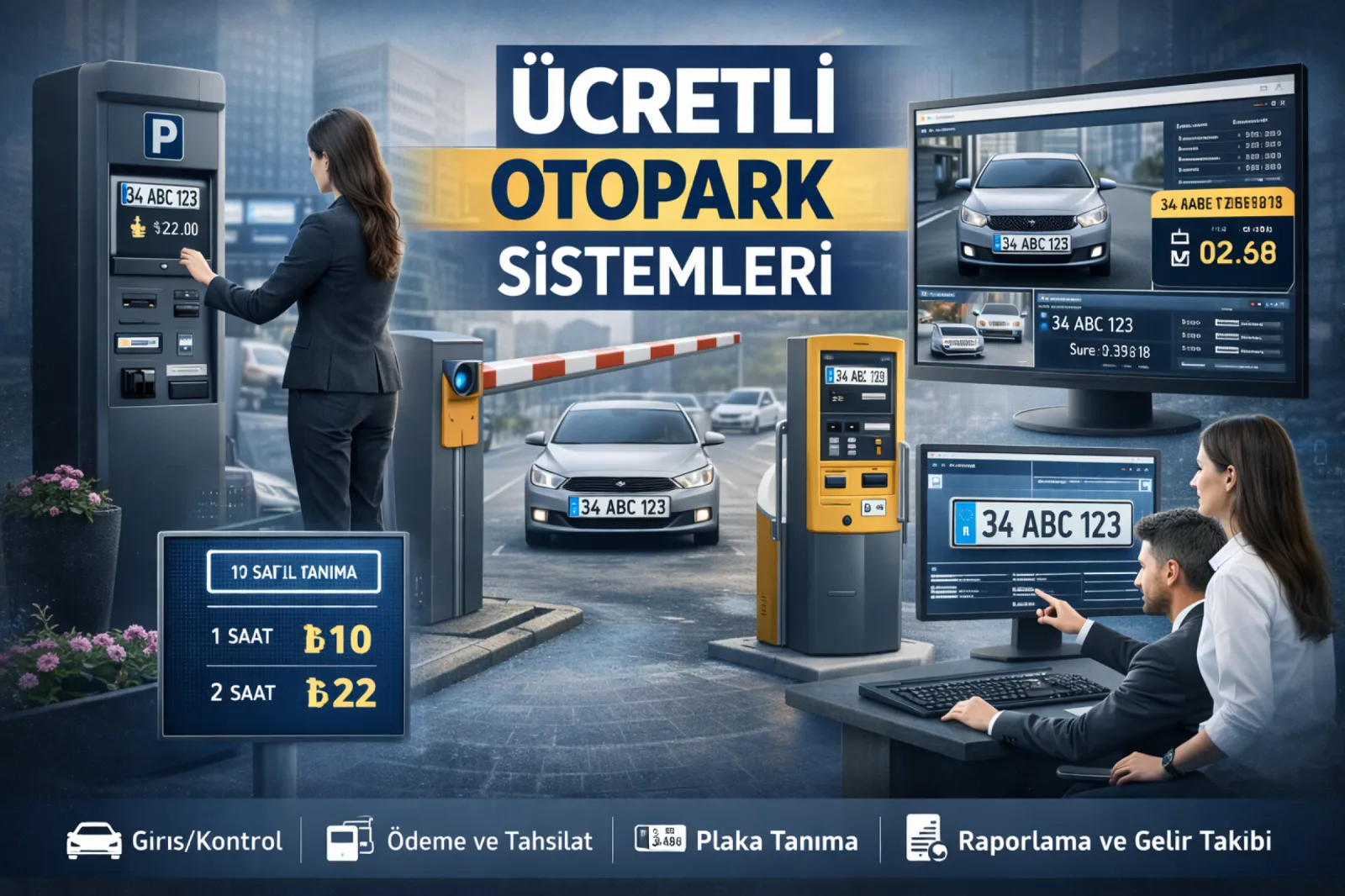
Paid Parking Systems
Paid parking systems evolve beyond classic barrier access structures into an integrated solution managing license plate recognition, automatic payment, subscription management, centralized reporting, and field operations together.
Paid Parking System Solutions
Today, paid parking systems have moved beyond being structures that merely control vehicle entry and exit, transforming into smart business solutions that combine collection, security, license plate recognition, subscription management, reporting, and operational control in a single center. Used in many different areas from open-air parking lots to indoor garages, shopping malls to hospitals, and hotels to municipal enterprises; these systems offer businesses the advantages of order, speed, control, and revenue management.
The paid parking system solutions offered by our company consist of professional infrastructures that are planned specifically for the project, can work integrated with license plate recognition, provide barrier control, manage payment processes, and report all data. The goal is not just to collect fees, but to manage the parking area efficiently, safely, and sustainably.
What is a Paid Parking System?
A paid parking system is an automation infrastructure that tracks the time elapsed from the moment a vehicle enters the parking lot until the moment it exits, charges this period according to the determined tariff, and provides controlled exit after payment is completed.
These systems generally consist of the following components:
- License plate recognition camera
- Parking barrier
- Ticket dispensing or plate registration infrastructure
- Payment point or collection terminal
- Management software
- Operator screen
- LED guidance and capacity screens
- Reporting and authorization modules
Depending on the needs of the business, the system can be configured with ticketless license plate recognition, ticketed, subscription-based, or centralized payment scenarios.
Why are Paid Parking Systems Necessary?
The most common problems in manually managed parking lots are incorrect pricing, loss of income, vehicle queues, personnel-related errors, inadequate inspection, and lack of reporting. Professional paid parking automation reduces these problems and provides clear control to the business.
The main benefits of paid parking systems are:
- Speeds up vehicle entry and exit processes
- Reduces revenue losses
- Prevents pricing errors
- Reduces personnel workload
- Increases parking security
- Facilitates subscription and guest vehicle management
- Offers daily, weekly, and monthly reporting opportunities
- Makes parking occupancy and usage data measurable
How Does a Paid Parking System Work?
The paid parking system starts working when the vehicle is detected at the entry point. Depending on the scenario used, the vehicle plate is read or a ticket is created. The system tracks time as long as the vehicle remains inside. At the exit stage, the fee is calculated according to the determined tariff, and the barrier opens when the payment is completed.
Entry Stage
When the vehicle enters, the system can perform the following operations:
- Automatic license plate recognition
- Recording the entry time
- Creating a ticket
- Subscriber or authorized vehicle check
- Automatic barrier opening
Duration and Fee Calculation
The system records the data for the duration the vehicle stays in the parking area. Hourly, daily, tiered, or special pricing can be applied according to the determined tariff.
Exit Stage
When the vehicle arrives at the exit, the system:
- Verifies the plate or ticket
- Calculates the duration
- Determines the fee
- Matches with payment information
- Ensures the controlled opening of the barrier
License Plate Recognition Paid Parking System
The license plate recognition paid parking system is one of the most preferred models of modern parking solutions. In this structure, the vehicle plate is automatically read at the entrance and the record is started. At the exit, the same vehicle is re-verified and charging is performed automatically.
Advantages of License Plate Recognition System
- Reduces the risk of ticket loss
- Shortens entry and exit times
- Provides automatic recording
- Facilitates subscriber and authorized vehicle management
- Increases the security level
- Provides faster and more regular traffic flow to the business
Especially in areas with high vehicle circulation, license plate recognition-supported paid parking systems offer significant operational advantages.
Where are Paid Parking Systems Used?
Paid parking solutions can be used in many different areas. Although the needs for each project are different, the main goal remains the same: to regulate vehicle entry-exit, to take pricing under control, and to facilitate business management.
Usage Areas
- Shopping mall parking lots
- Hospital parking lots
- Hotel parking lots
- Municipal open and closed parking lots
- Business center parking lots
- Terminal and transportation areas
- Residential and residence parking lots
- Private business and commercial facility parking lots
The scenario needed by each area is different. For this reason, the right paid parking system should be determined through project-based analysis.
Advantages of Paid Parking Systems for Businesses
Paid parking systems are not just automation that performs collection. They are also structures that increase the efficiency of the business and raise the power of control.
Revenue Control
The system records all transactions, ensuring that pricing and collection processes are managed transparently. This situation reduces revenue loss.
Operational Efficiency
It reduces manual processes, speeds up vehicle flow, and minimizes personnel-related problems.
User Satisfaction
Fast entry-exit, regular pricing, and easy payment opportunities improve the end-user experience.
Security and Recording
Vehicle plates, entry times, exit times, and transaction history are recorded, providing a security advantage to the business.
Manageability
All processes such as authorization, subscription, reporting, and device tracking can be managed centrally.
Payment and Collection Options
The payment model is very important when designing a paid parking system. The collection scenario needed by each business may be different.
Payment Models That Can Be Used
- Cash payment
- Card payment
- Centralized payment point
- Attendant collection
- Subscription-based usage
- Corporate defined vehicle passage
The main goal here is not just to make the collection, but to record, inspect, and report it.
Management Panel and Reporting Infrastructure
One of the most important parts of professional paid parking software is a powerful management panel. Thanks to the management panel, the business owner or authorized user can see vehicle movements, collection data, and system status instantly.
Data That Can Be Included in the Management Panel
- Daily entry and exit numbers
- Total collection amount
- Subscribed vehicle list
- Free passages
- Attendant transaction records
- Parking occupancy rate
- Peak hour intervals
- Plate-based vehicle history
- Device status reports
Thanks to this structure, parking management can be done based on data rather than intuition.
How to Choose the Right Paid Parking System?
Choosing the right system should not be done only by price comparison. The physical structure of the parking lot, daily vehicle density, user profile, number of entries and exits, collection model, and growth potential should be taken into account.
Things to Consider When Choosing a System
- Daily vehicle capacity of the parking lot
- Number of entry and exit points
- Open or closed area structure
- Need for license plate recognition
- Subscription or corporate usage rate
- Payment infrastructure requirement
- Reporting power of the software
- Technical service and support capacity
- Hardware quality
- Suitability for future expansion
A good paid parking system should offer trouble-free performance not only during the installation phase but also in long-term use.
Why Our Paid Parking System Solutions?
We handle paid parking systems not just as barrier and payment infrastructure, but as an end-to-end business management solution. We evaluate each project within its own operational structure, plan the most suitable scenario for the field, and offer a scalable system accordingly.
With our solutions:
- Entry and exit control is provided
- License plate recognition integration can be done
- Pricing scenarios can be customized
- Collection processes are recorded
- Subscriber and guest vehicle management can be done
- Reporting and analysis infrastructure is created
- The parking area is made more efficient
Our goal is not just to offer a product to your business, but to provide a working, controllable, and sustainable parking management system.
Paid parking systems have become indispensable in modern city life and in facilities with heavy vehicle traffic. These systems, which bring together entry-exit control, license plate recognition, collection, subscription, security, and reporting processes in a single center, provide businesses with both operational and financial advantages.
A correctly configured paid parking system offers faster vehicle flow, lower error rate, stronger revenue control, and a more professional business experience. If you are looking for a reliable and professional paid parking solution specific to your business, we can plan the system suitable for your project together.
Frequently Asked Questions
What is a paid parking system?
A paid parking system is an automation system that tracks the entry and exit times of vehicles, charges according to the determined tariff, and provides controlled exit after payment.
In which areas are paid parking systems used?
It can be used in shopping malls, hospitals, hotels, municipal parking lots, business centers, terminals, residential sites, and private business parking lots.
How does a license plate recognition paid parking system work?
The vehicle is detected by the license plate recognition camera at the entrance, and the system starts the duration. At the exit, the vehicle is identified again, the fee is calculated, and the barrier opens after payment.
What is the difference between a ticketed parking system and a license plate recognition system?
In the ticketed system, a ticket is created at the entrance and the transaction is tracked through the ticket. In the license plate recognition system, the vehicle plate is used as a digital identity. The license plate recognition structure offers a faster and automatic experience.
Do paid parking systems prevent revenue loss?
Yes. Thanks to automatic pricing, recorded transactions, and reporting infrastructure, revenue loss can be prevented by reducing manual errors and uncontrolled passages.
Can subscription management be done in paid parking systems?
Yes. Monthly, periodic, or corporate subscription definitions can be made. Subscriber vehicles can be automatically recognized in the system.
What information can be seen with the management panel?
Information such as vehicle entry-exit data, collection reports, occupancy rate, free passages, personnel transactions, plate history, and subscription records can be seen.
Are paid parking systems suitable for every project?
Yes, but the right scenario is different for each project. Special planning should be made by considering the size, density, entry-exit structure, and payment model of the parking lot.
Is the same system used for open and closed parking lots?
Although the basic logic is similar, the hardware and configuration may change according to field conditions. Environmental factors in open areas and entry-exit flow and area structure in closed areas should be taken into account.
How is the most accurate paid parking system determined?
The most suitable system is determined by analyzing project discovery, daily number of vehicles, user profile, payment type, license plate recognition need, and business expectations.
Related Products
Related References
For Detailed Info and Presentation
Our expert and technical team will contact you to prepare a detailed feasibility study.